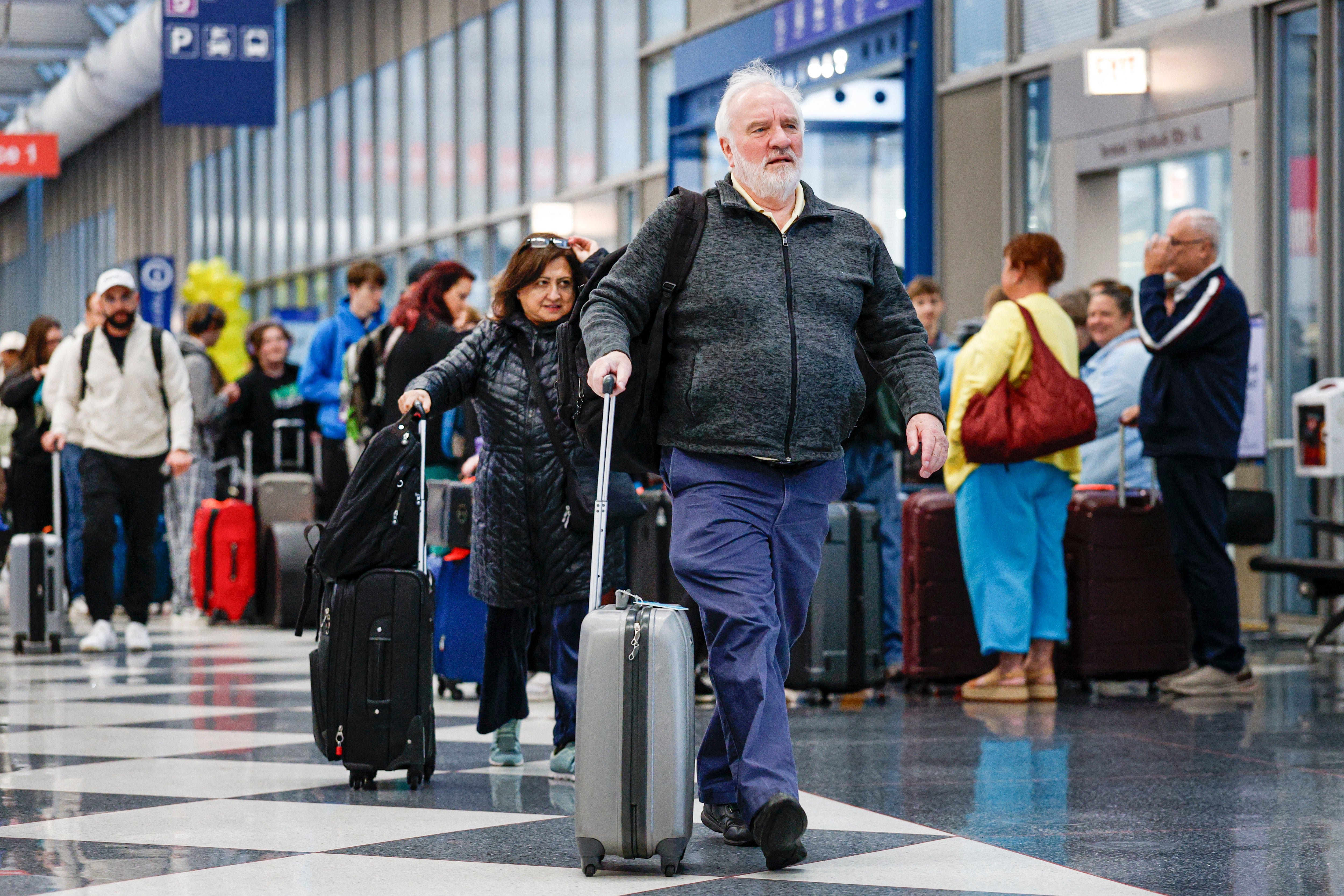
America’s busiest airports plunged into chaos as Thanksgiving travel hit its peak. A massive coast-to-coast storm forced the Federal Aviation Administration to impose ground stops at hubs like Houston’s George Bush Intercontinental and Chicago Midway, while delays at Atlanta’s Hartsfield-Jackson averaged 30 minutes. By midday Tuesday, more than 250 flights were delayed in Atlanta alone, and warnings extended to New York’s JFK, LaGuardia, and Newark airports. With 82 million Americans expected to travel at least 50 miles this week, the timing could not be worse. The FAA anticipates disruptions through the evening, urging travelers to check flight status before leaving home. Weather-related low ceilings and equipment outages compounded the crisis, creating ripple effects across the Midwest and East Coast. Full details here.
Meanwhile, tensions are boiling in the Caribbean. The U.S. has deployed an aircraft carrier strike group, stealth jets, and thousands of Marines near Venezuela, marking the largest regional buildup since the 1990 Panama invasion. President Trump authorized covert CIA operations and barred troops from taking Thanksgiving leave, signaling a readiness for escalation. Airlines canceled flights after the FAA warned of hazardous conditions in Venezuelan airspace. While Washington frames the move as an anti-drug campaign, critics see regime-change ambitions. Maduro, now labeled a member of an international terrorist group, insists Venezuela will resist any incursion. Yet Trump has hinted at talks, leaving observers to wonder whether this is a prelude to invasion or a high-stakes bluff for oil leverage. Read the analysis.
On the science front, researchers at the University of Cambridge have mapped five distinct “epochs” of brain development across a lifetime. Using MRI scans of 4,000 individuals aged 0 to 90, they identified turning points at roughly 9, 32, 66, and 83 years. Childhood wiring consolidates until age nine, adolescence extends into the early thirties, and adulthood remains stable until the mid-sixties. After that, connectivity declines, with the brain relying more on local networks by age 83. These findings could reshape understanding of learning, mental health, and dementia risk. Explore the study.
Urban dynamics are shifting dramatically. Jakarta has overtaken Tokyo as the world’s largest city, according to a new UN report. The Indonesian capital now counts nearly 42 million residents, up from 33rd place just seven years ago. Dhaka (Bangladesh’s capital) follows with 37 million, while Tokyo drops to third at 33 million. Nine of the ten biggest cities are in Asia, with Cairo as the lone exception. Jakarta’s explosive growth brings severe challenges: traffic gridlock, pollution, and flooding risks worsened by land subsidence and rising seas. Indonesia plans to relocate its capital to Borneo, but the project lags behind schedule. See the UN data.

In Iran, a water crisis is pushing radical decisions. Tehran, home to 10 million people, faces its driest autumn in 60 years. Reservoirs are near empty, rationing has begun, and officials warn of “Day Zero” if rains fail. President Masoud Pezeshkian says relocating the capital to the Makran coast is now “unavoidable.” The plan, estimated at up to $100 billion, aims to ease pressure on Tehran’s sinking ground and collapsing aquifers. Critics blame decades of mismanagement and corruption for Iran’s “water bankruptcy,” while sanctions hinder access to desalination technology. Read the full report.
Finally, NATO’s eastern flank is on high alert. Romanian and German fighter jets scrambled after a Russian drone penetrated more than 100 km into Romania – the deepest breach since the war began. The incursion, which occurred in daylight, triggered shelter alerts across three counties. Fragments found carried no explosives, but officials called it a “provocation.” NATO is deploying new anti-drone systems in the Danube Delta as tensions rise following repeated incursions and missile strikes near Ukrainian ports. Details here.